
Section 136 in Sussex
- Gillian Bendelow(PI),
- Claire Warrington(CoI),
- Carl Walker(PI)
- Sussex Partnership Foundation Trust,
- Sussex Police
Research project:
Grant
Project status
Finished
About the project
Research at the University of Brighton, conducted between 2013 and 2020, was instrumental in the changes to the use of Section 136, which deals with the removal of mentally disordered persons, without a warrant, if a police constable thinks it is necessary in the interests of their own safety or that of others.
The research brought about changes in national guidelines and new legislation (Policing and Crime Act, 2017), following concern that Section 136 had long been the default response for police to manage highly distressed members of the public when no other services were available.
The increase in the use of Section 136 had prompted growing scrutiny. Research piloted by Professor Gillian Bendelow together with Dr Claire Warrington, investigated practice with the aim of challenging simplistic perceptions through observations that gave prominence to the lived experience of those who had previously been detained.
The research shed light on the complexities at the core of the Section 136 detention rates, and the interventions being put in place to improve experiences. It highlighted successful joint working initiatives and emergent interventions with the data key to the process of embedding alternatives into current practice.
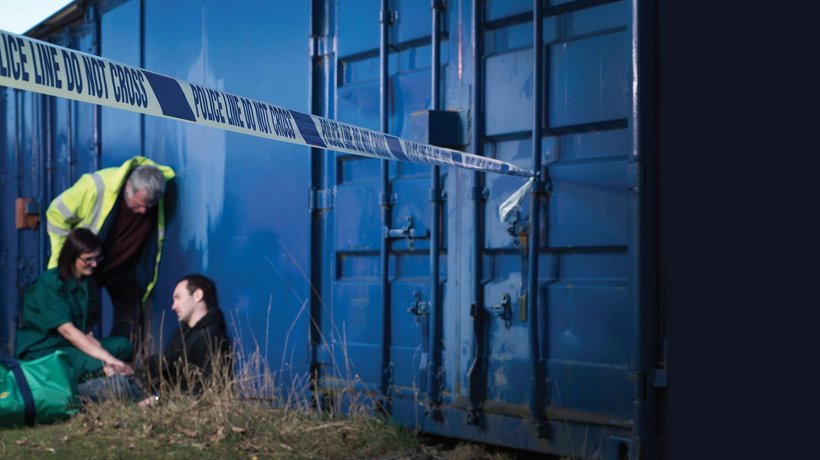
In 2014, East Sussex became the first county to implement a Street Triage scheme, where a highly experienced mental health professional accompanies police response officers on mental health emergencies to provide on-the-spot support and access to resources. The term ‘Street Triage’ now covers a range of activity nationally that helps frontline and community policing meet the needs of people in crisis.
Section 136 study in Sussex
From 2013, Professor Gillian Bendelow led the Section 136 study in Sussex working in partnership with Sussex Partnership Foundation Trust (SPFT) and Sussex Police.
The research was funded by a British Academy Senior Research Fellowship and the Mental Health Research Network using a mixed methods approach to analyse the statistical data jointly collected by the Trust and Sussex Police and to conduct over 200 hours of ethnographic and qualitative research with 300 SPFT staff, police, related service and voluntary workers as well as 62 people who had been detained under s136. Fieldwork and data analysis was carried out between 2013-16 with support from Claire Warrington (Research Co-ordinator) and SPFT research and development.
Claire Warrington completed her doctorate through the project and continued research through an SC DTP Postdoc Fellowship - Pathways from Repeated Detention (Section 136 of the Mental Health Act, Trauma and Frequent Suicide Attempts).
Project aims
The project aimed to:
> use secondary analysis of existing records to establish statistical patterns of s136 detention across Sussex in relation to gender, age, geographical location and other demographics
> establish the extent to which some individuals are repeatedly being sectioned under 136 and to gather in-depth information about the outcomes of detainees who are not admitted to hospital, referred to Community Mental Health Teams or other MH services
> collect qualitative interview data from detainees/ service users and those who have had contact with the Street Triage pilot regarding their experiences and perceptions of s136
> conduct detailed observations of policy making meetings, training sessions and emergency response teams
> undertake in-depth interviews with workers from SPFT, police and other statutory and non-statutory service providers
> provide an overview of current out-of-hours crisis intervention for vulnerable adults provided by SFPT and Sussex Police (and other services) across Sussex
build upon and influence good practice and feed into current debates of s136, both locally and nationally.
Key findings
The research findings revealed that in 2012, 80 per cent of all the s136 detentions (n=1421) across Sussex took place out-of-hours, appearing to be appropriately and compassionately used a means of suicide prevention in the face of no other available help or support.
Repeated detentions accounted for 13 per cent of the S136 incidents, involving a significant number of people who were disenfranchised from mental health services, often with a history of sexual abuse/trauma and/or a diagnosis of personality disorder. Some of these individuals felt that the police were the only statutory service who responded to their distress.
In depth interviews revealed that s136 was almost exclusively experienced as an appropriate ‘life-saving’, if highly traumatic, intervention by those who have been detained, but being detained in police custody added considerably to the stigma and humiliation of the experience in most cases. Use of alcohol was one the biggest barriers to receiving help for those who were not previously known to services who were self-medicating with alcohol to cope with their anxiety, and also for those who had a known addiction and who were referred back to Substance Misuse Services when they were in crisis despite a three-month or more waiting time for an appointment.
Between 2013-15, a series of stakeholder workshops were held at the University of Brighton to report on emerging issues from the data, and the research agenda highlighted successful joint working initiatives and significant interventions such as the Street Triage scheme, in which a highly experienced mental health professional accompanies police response officers on mental health emergencies to provide ‘on the spot’ support and access to resources. In conjunction with other suicide prevention initiatives developed through partnership working between the statutory and voluntary agencies, these innovations have resulted in dramatic improvements and policy initiatives to reduce the need for s136, with a 32 per cent reduction in detentions by 2015 across Sussex.
Perhaps more importantly, detention to police custody has dropped by 80 per cent from 984 in 2012 to 188 in 2015 and there has been a 77 per cent increase in detentions to health-based suites from 437 to 775.
The focus of the research on the ‘lived experience’ of those who have been detained has been able to highlight ' good practice' and intensive partnership working between police, NHS and other organisations (see awards) and has been influential across both local and national policymaking agendas.
Awards and policy agenda
Sussex Partnership Foundation Trust Positive Practice Awards:
> National NHS Leadership Recognition Awards, Senate House London (2016) > Finalist nomination for the Outstanding Collaborative Leader of the Year
Sussex Partnership Foundation Trust Positive Practice Awards (2015) Gold Award for Research and Teaching for the S136 in Sussex Research and Parity of Esteem Event, University of Brighton.
> Kent, Surrey and Sussex NHS Leadership Academy (2015) Winner of NHS Outstanding Collaborative Leader of the Year between Health and Local Government
Influencing policy
> Brighton and Hove Suicide Prevention Strategy Committee Brighton & Hove County Council
> Beachy Head Risk Management Group, East Sussex County Council
> Kent Surrey and Sussex Mental Health Clinical Advisory Group, South East Coast NHS England
> Home Office Department for Safeguarding Vulnerable People/NHS England Roundtable Consultation on the operation of Section 135 and 136
> Mental Health Triage National Conference Home Office/ NHS England, London
> National Mental Health Crisis Care Concordat Team South East Coast Strategic Clinical Network (Input into policy document single point of access for emergency mental health care)
> NHS England/Royal College of Psychiatrists/National Centre for Collaboration in Mental Health member of Expert Reference Group Achieving Better Access to Mental Health Services by 2020 programme.
Documents and links
Project Information
Project Type
Grant
Project Collaborators
- Sussex Partnership Foundation Trust
- Sussex Police
Time Period
01/10/2013 – 30/09/2020Status
FinishedID
Funder Project Reference: ES/T009276/1