
Why our ancestors turned to cannibalism
- James Cole(Research cited)
Press & media:
Press / Media
About this Press & Media
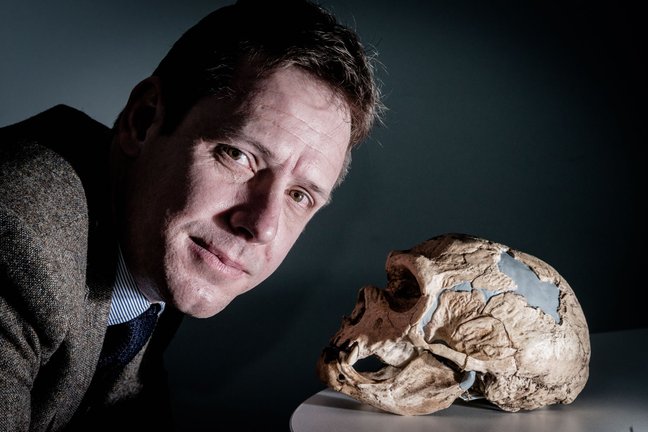
<p>Research undertaken by Dr James Cole, University of Brighton, has quantified the calorific value of the human body to shed more light on the habits of our ancient human ancestors, some of whom were cannibals.</p>
<p>Why did these past human species engage in the practice of cannibalism? Dr Cole said: “Human cannibalism is a subject that continues to hold a morbid fascination within modern societies. In particular, identifying the motivations for human cannibalism remains a contentious issue.</p>
<p>“In modern humans, cannibalism has been related to any combination of the following: survival, psychotic or criminal, aggressive, spiritual or ritual, gastronomic or dietary, and medicinal.</p>
<p>“Cannibalism is not, however, purely a characteristic of modern humans and has been practiced by a range of hominin species from at least one million years ago.”</p>
<p>Dr Cole, an expert in human origins and Senior Lecturer in Archaeology at the university, assessed the calorie value of the human body: A 65kg or 10 stone human has approximately 32,000 calories in their muscle tissue compared to 163,000 calories in the muscle tissue of a deer and an estimated 3.6 million calories for the muscle tissue of a mammoth.</p>
<p>The results question the idea that our ancestors hunted and consumed members of their own species for strictly nutritional reasons given the much greater calorie return from the faunal species we know were commonly consumed in the past.</p>
Press & Media Information
Media Coverage
Title
Are Humans Nutritious? Cannibalism Study Wins Ig Nobel Prize
Media type
Web
Media name
Smithsonian Magazine
Media description
Few would suggest that humans frequently hunted each other down for food. Even if they had no qualms about killing and eating each other, easier, less intelligent prey would have likely formed the basis of their diet. Besides, when University of Brighton archaeologist James Cole broke down the nutritional value of human meat, he found our bodies’ caloric values so low that other Paleolithic prey would have been far more desirable.<br/><br/>Instead, cannibalistic meals may have been dietary supplements. Our ancestors simply took advantage of the deceased as easy pickings—at least during earlier stages of our evolution. Other, younger sites from a wide range of time do show evidence of what appears to be ritual or cultural cannibalism, both within groups and representing aggression between groups.
Date
26/06/2023
Degree of recognition
International
Country
United States
Producer
Brian Handwerk
Persons
- James Cole(Research cited)
Media Coverage
Title
Ancient Cannibals Didn’t Eat Just for the Calories, Study Suggests
Media type
Print
Media name
New York Times
Media description
Here’s some food for thought. How many calories would you get from consuming one whole human body? More than 125,000, according to a new study on human cannibalism that will either make you queasy or have you reaching for some fava beans and a nice chianti.<br/><br/>For more than a decade James Cole, an archaeologist from the University of Brighton in England, pondered that question while studying “nutritional human cannibalism” during the Paleolithic, which lasted from about 2.5 million years ago to about 10,000 years ago.<br/><br/><br/><br/>
Date
06/08/2017
Degree of recognition
International
Country
United States
Producer
Nicolas St Fleur
Persons
- James Cole(Research cited)
Media Coverage
Title
Why Did Cannibals Eat Other People? (Hint: It's Not For the Calories)
Media type
Web
Media name
Time Magazine
Media description
No matter how hungry you are, you’d be very unlikely to sit down to a piping hot bowl of Larry—or anyone else, for that matter. In other words, you wouldn’t eat another person.<br/><br/>Cannibalism has existed throughout the long, strange arc of human history, but even on those occasions when it’s been justified—when the Donner party had a dinner party, say—we don’t much like to think about it. Anthropologists, however, find the topic of cannibalism irresistible. The part that intrigues them most is the why: What situations would impel otherwise sociable humans to turn Stu into stew, or Frank into furter?<br/><br/>Now, James Cole, a senior lecturer in archaeology at the University of Brighton, may have an answer. In a new study published in Nature, Cole calculates the calorie content of nearly all edible parts of the human body—from loin to ribs to tender rump—and concludes that when people have eaten people, it usually hasn’t been for the nutrition.<br/><br/>Most incidents of human cannibalism occurred during the Paleolithic period: roughly from 2.5 million to 10,000 years ago, a range that easily includes the first appearance to Homo sapiens. To the untrained eye, human remains are just human remains, and once the flesh is off the bone it’s impossible to determine if it decomposed or was devoured. Archaeologists, however, are experts at spotting the unlovely clues that a body became a meal, including parallel cut marks on bone; the absence of the base of the cranium, which would provide access to the brain; and jagged breakage or scorching of bones, both of which suggest attempts to get at the marrow.
Date
06/04/2017
Degree of recognition
International
Country
United States
Producer
Jeffrey Kluger
Persons
- James Cole(Research cited)
Media Coverage
Title
Prehistoric cannibalism not just driven by hunger, study reveals
Media type
Print
Media name
The Guardian
Media description
Cannibalism among prehistoric humans was more likely to have been driven by social reasons than the need for a hearty meal, research suggests.<br/><br/>Evidence of cannibalism, in the form of cut marks, tooth marks and tell-tale bone breakage has been found at a number of prehistoric sites, including in France, Spain and Belgium, revealing that our ancestors as well as other hominins such as Neanderthals and Homo antecessor at least occasionally ate each other.<br/><br/>But how common cannibalism was and to what extent it was driven by the need for nutrition has been a matter of debate, with remains from some sites showing evidence of ritual treatment.<br/><br/>The latest study adds weight to the idea that cannibalism might have been driven by more than the necessity of hunger.<br/><br/>Totting up the nutritional value of the human body, James Cole, an expert in human evolution from the University of Brighton, reveals that an adult male of about 66kg contains roughly 144,000 calories, with skeletal muscle accounting for just over 32,000 calories, kidneys providing 376 calories and the spleen 128 calories.<br/><br/>But the nutritional value of a host of animal species whose remains – showing signs of butchery – were found at the sites, are higher. The skeletal muscle of a mammoth offered 3,600,000 calories, a horse 200,100 calories and a red deer 163,680 calories. Saiga antelope, however are on a par with humans, with their skeletal muscle containing 31,500 calories.<br/><br/>“What this suggests is that we aren’t terribly nutritious,” said Cole, author of the research published in the journal Scientific Reports. “We are a fairly small animal really and we don’t have much flesh and meat or fat to us, and we certainly wouldn’t necessarily have done in the past either.”
Date
06/04/2017
Degree of recognition
International
Country
United Kingdom
Producer
Nicola Davis
Persons
- James Cole(Research cited)