
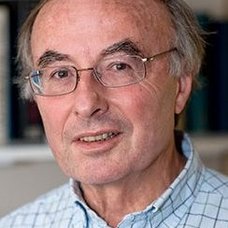
Ian Russell
- Centre for Lifelong Health
- Emeritus Professor, School of Applied Sciences
I was in the first cohort of 11+ entry to Chatham Technical School where I became interested in physics and engineering and took Zoology at Chatham Technical College. I went on to study marine biology and physics at Queen Mary College, University of London under the inspirational tutelage of Professors Eric Smith and Gordon Newell. A Commonwealth Studentship in 1964 to study the significance for fishes of underwater noise under the supportive guidance of David Randall at the University of British Columbia began an endless cycle of grant applications that has kept me in continuous research funding to date. On the basis of presenting a paper on the lateral line system at a meeting in New York I was invited by Hans Lissman, the discoverer of electroreception and electro-communication by fishes, to complete my PhD in Cambridge with a research studentship at Trinity Hall. My research was on a multidisciplinary approach to the efferent control of the lateral line system, which enabled me to consult with experts in widely different research fields all of which would now be classified as Neuroscience and who met at the Saturday Club (the foundation of Neuroscience at Cambridge) in an attic above my lab in Zoology. Following completion of my PhD, I won research fellowships at Magdalene and with the SRC (BBSRC) but spent most of my time at the Plymouth Marine lab working together with Barry Roberts on the lateral lines of dogfish and their functional significance during swimming. We were supported by the stimulating discussion, insight and encouragement of the director Eric Denton and Sir John Gray. During this period, I won a Royal Society Research Fellowship to work with Åke Flock on the cellular basis of sensory transduction in lateral line hair cells and its efferent control. The year in Stockholm was an intense and incredibly rewarding period. Åke was a brilliant, imaginative, innovative and very kind person who made the experience productive and enjoyable. Immediately at the end of the year (1970), I took up a lectureship in Neurobiology at the University of Sussex. Possibly the first ever appointment of its kind. The exciting challenge was to be part of the team of biologists and experimental psychologist led by Richard Andrew who designed and initiated the first undergraduate Neurobiology major. Later, I assembled majors in Cognitive Neuroscience, Medical Neuroscience and contributed to Psychology with Neuroscience. Through collaboration with my friend and colleague, Peter Sellick, we defied reason and the BBSRC and made intracellular recordings from sensory cells in the mammalian cochlea. So began research with stimulating and productive colleagues and research students and funded initially from unclaimed prize money from the Reader’s Digest, initiated by the divine intervention of Colin Blakemore, and then largely through programme grants from the MRC and Wellcome Trust which continues at Brighton under the direction of Andrei Lukashkin. Andrei has been pivotal to the research since he joined the lab in 1995 as a remarkable research student who won a Wellcome Prize Studentship in Mathematical Biology to support his DPhil. We continue another line of research on audition and auditory behaviour of mosquitoes begun by chance following a fairly coherent conversation in a pub in Lewes with Gay Gibson, which is overseen by Patricio Simoes who has taken the research in new and exciting directions.
Research interests
I am a neuroscientist who studies the molecular biology, cellular biology and biophysics of the normal function and dysfunction of the cochlea in relation to its role in hearing and deafness. I have studied cochlear mechanisms involved in echolocation by bats. I also investigate acoustic behaviour and the physiology of the auditory system by mosquitoes.
Academic qualifications
Academic Qualifications
- Royal Society of BiologyProject: Fellow of the Royal Society of Biology
- The Association for Research in OtolaryngologyProject: Award of Merit The Association for Research in Otolaryngology
- Royal SocietyProject: Fellow of the Royal Society