
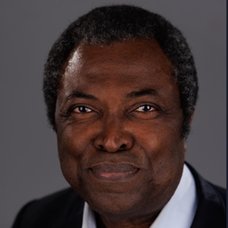
Christian Kwami Agbodza, AMIMA, FCMA, MInstF (Dip)
Research interests
My doctoral study investigates how Initial Teacher Training (ITT) programs in England prepare pre-service secondary mathematics teachers to explicitly teach mathematical values. While mathematical values—such as rationalism, objectism, control, progress, openness, and mystery—are embedded in mathematics education, they are often taught implicitly, leaving many teachers unaware of their role as value agents. The research addresses this gap by exploring the extent to which ITT programs equip teachers with the knowledge and pedagogical strategies necessary to explicitly incorporate these values into their teaching practices.
Approach to teaching
Professional Stance
I am a mathematics educator and Educational Doctoral researcher at the University of Brighton. My work explores the explicit teaching of mathematical values within Initial Teacher Training (ITT) and pre-service teacher education, examining how classroom practice, policy, and theory intersect in the formation of mathematical thinking.
My professional stance integrates classroom practice, national policy, and research-informed theory within a coherent values-based framework.
Classroom Practice
My classroom practice is grounded in cultivating intellectual curiosity, disciplined reasoning, and mathematical agency in all learners.
-
Teach all students to love and engage meaningfully with mathematics (Jo Boaler, 2009).
-
Design lessons that integrate thinking and memory as complementary cognitive processes (Daniel Willingham, 2008).
-
Differentiate through structured questioning to develop deep conceptual understanding (Stephen I. Brown & Marion I. Walter, 2005).
-
Implement context-sensitive pedagogies including Inquiry-Based Mathematics (IME), Problem-Solving Mathematics Education (PME), and Realistic Mathematics Education (RME), adapting approaches according to learner readiness and mathematical demand.
-
Treat mistakes as epistemic opportunities — consistently asking “why?” to foreground reasoning.
-
Praise processes and strategies rather than fixed personal traits.
-
Apply insights from cognitive science and neuroscience to support durable mathematical memory and conceptual fluency.
Policy
My practice aligns with statutory and professional expectations while maintaining a critical and reflective stance.
-
Meet and extend the Teachers’ Standards through sustained professional development.
-
Teach students to reason mathematically in line with Department for Education (2014) expectations:
-
Formulating and testing conjectures
-
Constructing arguments and proofs
-
Reasoning deductively
-
Evaluating statistical and probabilistic claims
-
Assessing validity and accuracy
-
-
Implement whole-school policies related to safeguarding, behaviour, and high expectations for effort and scholarship.
Academic qualifications
Academic Qualifications
- Project: Postgraduate Certificate in Education
- Master, London Guildhall UniversityProject: Master of Arts in Economics,
- Bachelor, London Guildhall UniversityProject: Honours Programme in Economics
External positions
External Positions
- President of Hastings District, National Education Union
- Director, The Kwame Nkrumah Trust
- Teacher of Mathematics, University of Brighton Multi Academy Trust