
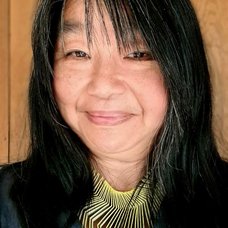
Audrey Yong
- Senior Lecturer, School of Education, Sport and Health
- Centre for Arts and Wellbeing
<p><span style="font-size: 12pt;">Audrey's occupational therapy career began in the NHS where she worked in mental health services and subsequently, in learning/intellectual disability services. In this time, she worked with people with complex health and social care needs, alongside their families, carers and support services; with the aim of supporting their occupational participation in life. She moved into academia after 26 years of working in the NHS. </span></p>
<p><span style="font-size: 12pt;">She is currently working toward her PhD by Publication, which focuses on the concepts of humanising, empathic and safe home environment designing for people with intellectual disability. </span></p>
<p><span style="font-size: 12pt;">In 2023, Audrey was awarded the Royal College of Occupational therapists Research Career Development grant to support the following research study: <em>The occupational therapy contribution to good home environment design to support the participation and wellbeing of people with intellectual disability.</em></span></p>
<p><span style="font-size: 12pt;">In 2025, she was awarded further funding from University of Brighton Research & Knowledge Exchange (R&KE) Development Fund to evaluate the contribution of Experts-by Experience (EbE’s) in the RCOT funded project above and to continue working collaboratively with EbEs to develp their research partnership. </span></p>
<p><span style="font-size: 12pt;">Audrey is a member of the University of Brighton <a href="https://blogs.brighton.ac.uk/solid/">SOLID Research Group</a> and <a href="https://www.brighton.ac.uk/caw/index.aspx">Centre of Arts and Wellbeing (CAW)</a> and and her other research projects can be found <a href="https://blogs.brighton.ac.uk/solid/our-other-projects/">here</a>. </span></p>
Research interests
<p><span style="font-size: 12pt;">Audrey's research interests stems from her clinical experience, working in partnership with people with learning or intellectual disability and their caregivers. </span></p>
<p><span style="font-size: 12pt;">Audrey's current series of research projects integrates her clinical knowledge and experience with her personal interest in the concepts of humanising and empathic home environment designing (designing that puts the person in the centre and can evoke emotion, attention, and influence sensation and wellbeing). She is interested in the influence of 'home' on people, which considers the sensory experience and use of space within home designing and how it may affect one's emotions and participation in order to thrive and flourish in that space. </span></p>
<p><span style="font-size: 12pt;">Her collaborative research with experts-by-experience and colleagues in practice aims to increase the understanding of the occupational therapy contribution to this area. The overall goal is to better support people with intellectual disabilities to live a safe and sustainable quality of life in their homes and communities.</span></p>
<p><span style="font-size: 12pt;"> She is also interested in the use of photography/photos as a creative and visual research method. </span></p>
<p><span style="font-size: 12pt;">A list of research/supervisory areas of interest can be found further below. </span></p>
Supervisory interests
<p><span style="font-size: 12pt;">Audrey is interested in supervising students on their research projects within the scope of her expertise. This could be in an area of her interests or methodological experience: </span></p>
<p><span style="font-size: 12pt;">Areas of interest:</span></p>
<ul><li style="font-size: 12pt;"><span style="font-size: 12pt;">Humanistic home environment designing to support wellbeing and participation</span></li><li style="font-size: 12pt;"><span style="font-size: 12pt;">The importance and influence of 'home' (and in relation to the occupational science concepts of 'doing, being, becoming, belonging').</span></li><li style="font-size: 12pt;"><span style="font-size: 12pt;">The occupational participation of people with learning or intellectual disability. </span></li><li style="font-size: 12pt;"><span style="font-size: 12pt;">The concept of belonging in one's community.</span></li><li style="font-size: 12pt;"><span style="font-size: 12pt;">Human rights and occupational justice for people who are marginalised. </span></li><li style="font-size: 12pt;"><span style="font-size: 12pt;">The use of photographic methods in research (photovoice, photo elicitation, photo novella).</span></li><li style="font-size: 12pt;"><span style="font-size: 12pt;">Sensory integration or processing.</span></li><li style="font-size: 12pt;"><span style="font-size: 12pt;">Dementia and family caregiving.</span></li></ul>
<p><span style="font-size: 12pt;">Areas of methodological experience:</span></p>
<ul><li style="font-size: 12pt;"><span style="font-size: 12pt;">Qualitative research.</span></li><li style="font-size: 12pt;"><span style="font-size: 12pt;">Systematic or scoping review.</span></li></ul>
<p><span style="font-size: 14pt;"> </span></p>
Approach to teaching
<p><span style="font-family: 'Lucida Grande', sans-serif; font-size: 12pt;">Audrey is the MSc Occupational Therapy (Pre-registration) programme leader. She was previously the practice placement lead for eight years, and the role included the coordination of diverse placements, which is now very much embedded across the curriculum. The diverse placement model offers learners a distinctive and expansive experience beyond traditional NHS or local authority settings, enabling them to apply an occupational perspective within a wide range of contexts. This approach reflects the profession’s core belief that participation in occupation is fundamental to all aspects of daily life.</span></p>
<p><span style="font-family: 'Lucida Grande', sans-serif; font-size: 12pt;">Audrey's clinical expertise lies in the field of intellectual disability. She draws on this specialist background to enrich her teaching, integrating policy, evidence-informed practice, and emerging developments to illuminate the realities of occupational therapy in practice. Her teaching incorporates a blend of online resources, practical application and authentic case studies to support meaningful enagament and applied learning. </span></p>
<p><span style="font-family: 'Lucida Grande',sans-serif;"><span style="font-size: 12pt;">As a tutor, Audrey is committed to the Problem-Based Learning (PBL) philosophy embedded throughout the occupational therapy curriculum at the University of Brighton. This interactive and inclusive pedagogy supports small groups of learners to develop the habits of lifelong learning. Audrey adopts a 'just-right; balance of challenge and support, encouraging both critical and reflective thinking while valuing the personal and professional contribution brought by each learner to the shared learning environment.</span></span></p>
<p><span style="font-family: 'Lucida Grande',sans-serif;"><span style="font-size: 12pt;">Within the curriculum, Audrey faciliates photography and hand-built pottery as therapeutic occupations. Through direct engagement in these creative processes,learners develop an embodied understanding of how occupations can act as agents of change for individuals to enagage meaningfully in their environments. </span></span><span style="font-family: 'Lucida Grande',sans-serif;"><span style="font-size: 12pt;"> </span> </span></p>
<p> </p>
Academic qualifications
Academic Qualifications
- Master, University of Brighton
- Advance HEProject: Fellow of Advance HE
- Ulster UniversityProject: Sensory Integration practitioner
External positions
External Positions
- External Examiner, Birmingham City University